

A CLEAR PRESSURE FRAMEWORK
Know exactly what changes inside you at 40–40, in tie-breaks and in third sets — and how to control it instead of being controlled.
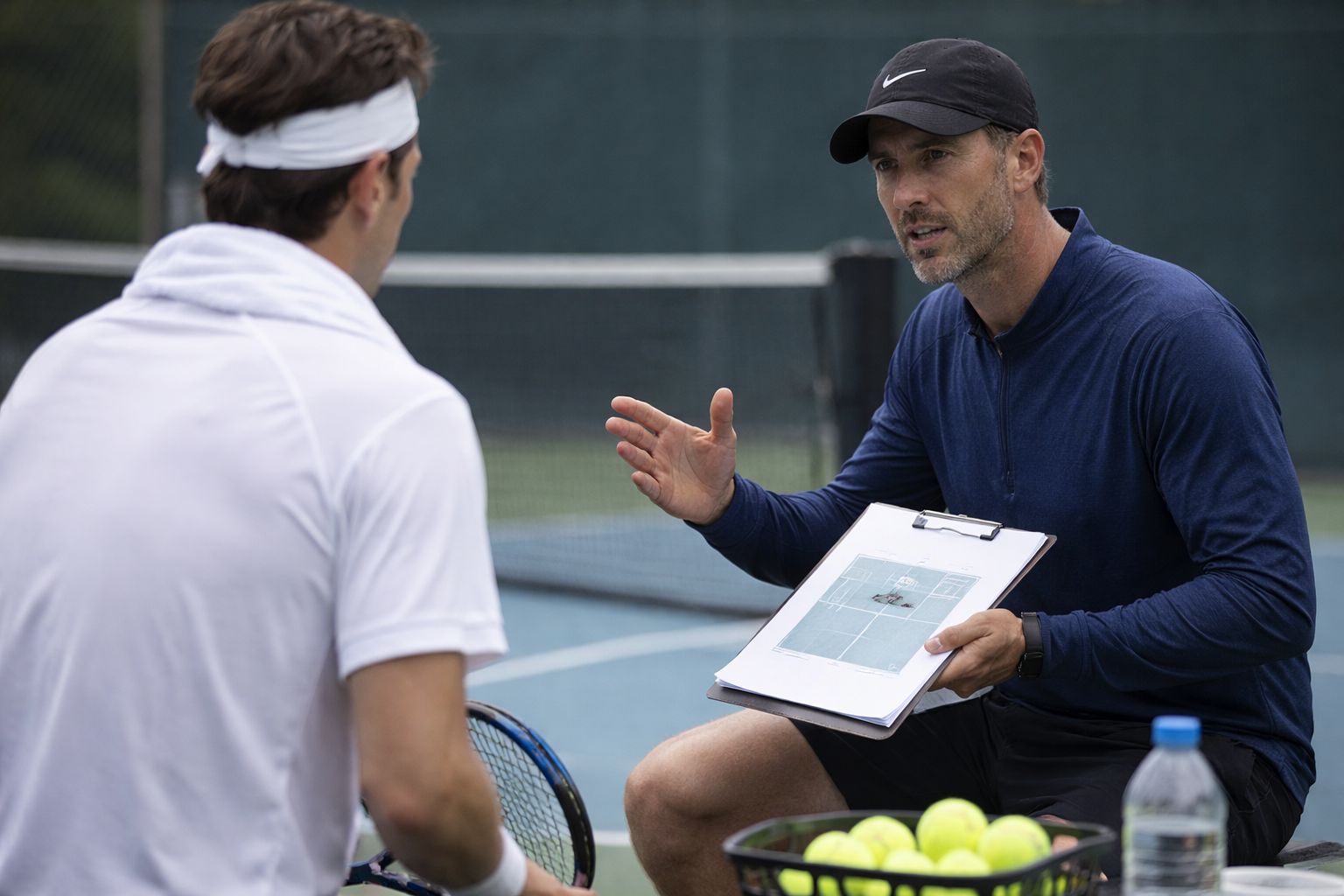
MATCH STABILITY PROTOCOLS
Step-by-step routines to regulate activation, protect your identity and stop emotional swings from hijacking decisive points.

A REPLICABLE PERFORMANCE SYSTEM
A structured system you can apply tournament after tournament — not motivation that disappears when the score gets tight.
About the course
If you compete in tournaments, you know this feeling: You were technically there. Your level was enough. But when the score became heavy, something shifted. This course exists for that shift. Not for motivation. Not for hype. But for structure. Inside this program you will learn: • Why your performance changes in 40-40, tie-breaks and decisive games • How activation alters decision-making under pressure • How to maintain your game identity when the score tightens • Practical match protocols you can replicate during the season You will not eliminate pressure. But you will stop letting it decide for you. This is not theory. It is a performance framework built for competitive players who want stability when it matters most.
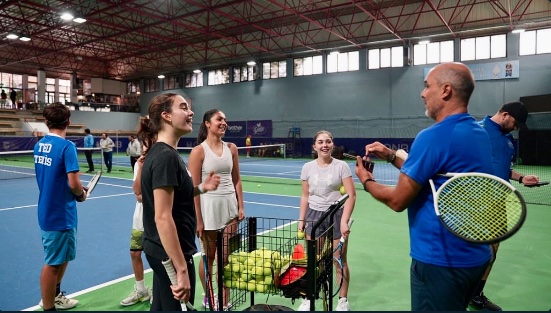
Federico Coppini
I work with competitive tennis players who struggle in decisive match moments. Over the years I’ve seen a consistent pattern: Players don’t lose because of technique. They lose because their internal system becomes unstable when the score carries weight. My work focuses on building structured performance frameworks — not motivational speeches. This course is the condensed version of the systems I use with players during tournament seasons to stabilize activation, maintain identity and perform under pressure. If you are serious about competing, you need structure — not inspiration. That is what this program is built for.
Course Structure
-
-
(Included in full purchase)
LESSON 1. WHY YOU LOSE AT DEUCE (40–40)
-
(Included in full purchase)
LESSON 2. WHEN THE SCORE CHANGES… YOU CHANGE TOO
-
(Included in full purchase)
LESSON 3. WHAT YOU SAY TO YOURSELF IN THE MOMENTS THAT MATTER
-
(Included in full purchase)
LESSON 4. YOUR FIRST PROTOCOL FOR DECISIVE GAMES
-
(Included in full purchase)
-
-
(Included in full purchase)
LESSON 1 – Who Are You When the Score Gets Heavy?
-
(Included in full purchase)
LESSON 2 – The Error Is Not the Problem. What It Means to You Is.
-
(Included in full purchase)
LESSON 3 – Building Your Competitive Identity Script
-
(Included in full purchase)
LESSON 4 – When the Body Betrays Identity: Understanding and Regulating Activation Under Pressure
-
(Included in full purchase)
LESSON 5 – Integrating Identity, Error, and Physiology: Your Personal System Under Pressure
-
(Included in full purchase)
-
-
(Included in full purchase)
LESSON 1 – Why You Go Automatic at 40–40 (And Why It’s Not Random)
-
(Included in full purchase)
LESSON 2 – After You Get Broken: Preventing the Chain Collapse
-
(Included in full purchase)
LESSON 3 – Serving for the Set: Why You Change Right When You’re About to Close
-
(Included in full purchase)
LESSON 4 – The Tie-Break: Managing Pressure in Sequence
-
(Included in full purchase)
LESSON 5 – Recovering a Break Without Losing Balance
-
(Included in full purchase)
LESSON 6 – The Third Set: When Fatigue Amplifies Pressure
-
(Included in full purchase)
-
-
(Included in full purchase)
TRANSFORMING THE PROTOCOL INTO AUTOMATION
-
(Included in full purchase)
FINAL LESSON – Pressure Is Not What Stops You. It’s the Identity You Choose When It Arrives.
-
(Included in full purchase)
High-level competitive experience
This system was not built in a classroom. It was shaped through daily analysis of ITF, ATP and WTA match situations — where decisive moments determine entire seasons. Working with players competing internationally, one pattern became clear: The difference at 40-40 is not technical. It is structural. Score management, activation control and identity stability under pressure determine outcomes. This course is the operational synthesis of that work.
Yasmin Ezzat – Egypt International competitive development pathway WTA ranking Top 600
WTA tennis player

Philip Henning – South Africa ATP Ranking ~310 High-level technical and mental performance collaboration across international tournaments
ATP tennis player
Kris Van Wyk – South Africa Development pathway from national circuit to ATP ranking 324 within 8 months Performance work focused on competitive structure, decisive moment management and stability under pressure.
ATP tennis player
Junior Development Sector In recent years, I have worked with multiple South African junior players competing on the ITF circuit. Among them: Jahnie Van Zyl – South Africa ITF Junior Top 100 WTA ranking around 900 at 14 years old Competitive pathway focused on match development, score management and decision-making maturity in decisive moments.
Yasmin Ezzat – Egypt International competitive development pathway WTA ranking Top 600
WTA tennis player
Junior Development Sector In recent years, I have worked with multiple South African junior players competing on the ITF circuit. Among them: Jahnie Van Zyl – South Africa ITF Junior Top 100 WTA ranking around 900 at 14 years old Competitive pathway focused on match development, score management and decision-making maturity in decisive moments.
Philip Henning – South Africa ATP Ranking ~310 High-level technical and mental performance collaboration across international tournaments
ATP tennis player
Kris Van Wyk – South Africa Development pathway from national circuit to ATP ranking 324 within 8 months Performance work focused on competitive structure, decisive moment management and stability under pressure.
ATP tennis player
STAY STABLE WHEN IT MATTERS MOST
You already know how to play. What changes is what happens inside you at 40-40, in tie-breaks and in third sets. This course gives you a clear structure to stay stable under pressure — without changing your identity. No hype. No motivational tricks. Just a system you can apply immediately in competition.
€77,00